



7 1920s Fashion Shoe Trends

Why 1920s Fashion Shoes Changed Everything
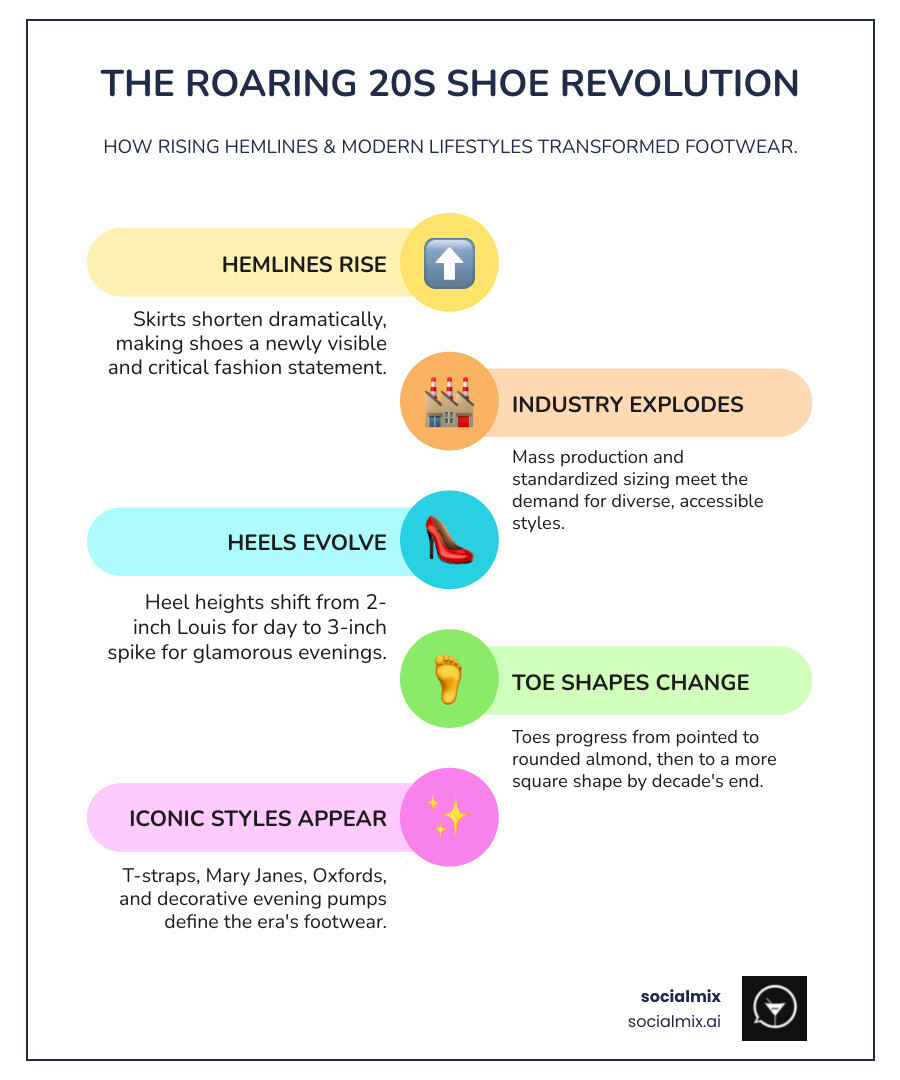
1920s fashion shoes transformed from hidden necessities into bold fashion statements as hemlines rose and the Jazz Age took hold. Here's what defined this decade in footwear:
The Most Popular 1920s Shoe Styles:
- T-Strap Heels - Secure dancing shoes with a distinctive "T" across the vamp
- Mary Janes - Single-strap pumps for both fancy events and daily wear
- Oxfords - Practical lace-up shoes with low heels for everyday activities
- Two-Tone Spectators - Sporty color-blocked shoes in brown and white
- Evening Pumps - Ornate satin heels with rhinestones and 3-inch spike heels
- Canvas Sneakers - Early athletic shoes by Keds for sports and leisure
- Galoshes & Boots - Weather protection that may have inspired the term "flapper"
The most remarkable thing about women's shoe history in the 1920s was simple: shoes were actually visible.
For the first time in modern history, rising hemlines exposed women's ankles and legs. What had been hidden undergarments suddenly became admired fashion accessories. This single shift triggered an explosion in the shoe industry.
The demand for new styles every season made custom-fit shoe ordering obsolete. Shoes were now mass-produced in standard sizes, ready to buy from local stores or mail-order catalogs. Women could suddenly match their shoes to their outfits, seasons, and activities—from dancing the Charleston in secure T-straps to playing tennis in canvas sneakers.
Heel heights evolved from sturdy 2-inch "Louis" heels to slender 3-inch "spike" heels for evening wear. Toes shifted from sharply pointed to rounded almond shapes, then almost square by decade's end. Materials ranged from practical leather and canvas to glamorous satin and exotic reptile skins.
For the urban socialite seeking distinctive style with authentic flair, 1920s footwear offers endless inspiration. These weren't just shoes—they were symbols of women's newfound freedom and independence.
The Strappy Revolution: T-Straps & Mary Janes
The Jazz Age brought with it a revolution in women's fashion and lifestyle. No longer confined to restrictive corsets and floor-length skirts, women acceptd a new freedom, epitomized by the energetic flapper culture. This shift had a profound impact on 1920s fashion shoes, particularly the rise of strappy styles that catered to active women who loved to dance. As hemlines continued to rise, exposing more of the ankle and calf, shoes moved from being an afterthought to a central component of an outfit, a true fashion statement. We saw a dramatic increase in the variety and visibility of footwear, turning every step into an opportunity for expression.
The dance floors of the 1920s, alive with the Charleston and Lindy Hop, demanded footwear that could keep up. Women needed shoes that wouldn't fly off mid-twirl. This practical necessity, combined with a desire for stylish adornment, propelled T-straps and Mary Janes to the forefront of fashion.
Trend 1: The T-Strap Heel
The T-strap heel, also known as the Sally Pump or T-Bar (especially in Britain), was arguably the most iconic strappy shoe of the Roaring Twenties. Its design featured a strap running from the toe to the vamp, intersected by another strap across the instep, forming a distinct "T" shape. This innovative design wasn't just about aesthetics; it was a stroke of genius for the dancing craze. The T-strap offered unparalleled security, keeping the shoe firmly on the foot through even the most vigorous Charleston steps.
While it made a brief appearance earlier in the decade, the T-strap truly exploded in popularity in the late 1920s, paving the way for an even greater surge in the 1930s. These shoes were a favorite among flappers and Hollywood stars, embodying the era's blend of glamour and practicality. They allowed women to confidently express their newfound freedom on the dance floor, making them synonymous with the vibrant energy of the Jazz Age. To learn more about the broader fashion landscape of this exciting era, check out our guide on Dressed to the Nines: Prohibition Era Fashion Unveiled.
Trend 2: The Timeless Mary Jane
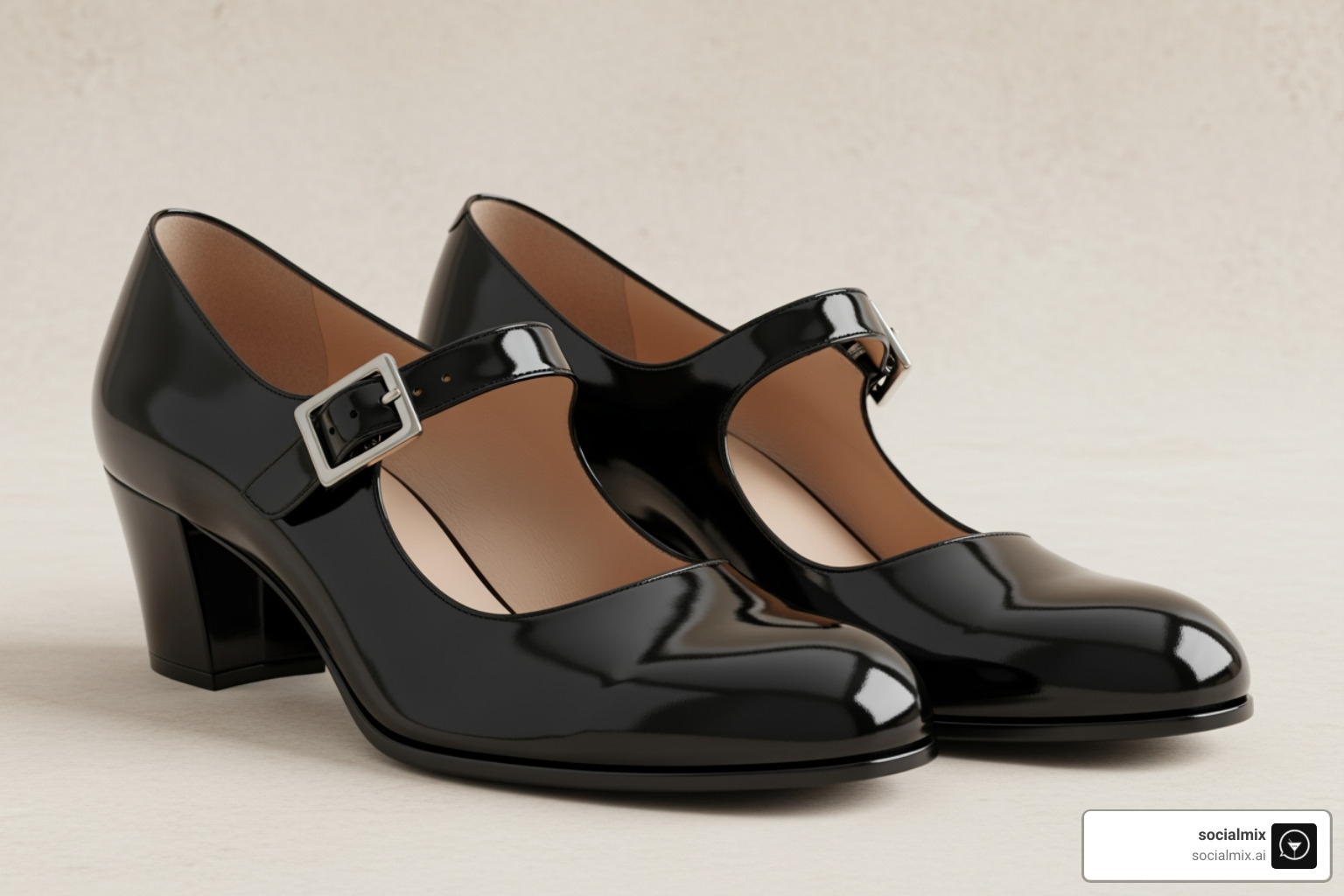
Alongside the T-strap, the Mary Jane held its own as a beloved style of 1920s fashion shoes. Characterized by a single strap across the vamp, fastened with a buckle or button, the Mary Jane offered a balance of elegance and comfort. It came in both fancy "flapper" models, often adorned with decorative elements, and more practical, low-heeled comfort shoes.
The versatility of the Mary Jane was remarkable. Its secure strap made it suitable for social occasions and dancing, much like its T-strap cousin, but its simpler design also lent itself to everyday wear. We even know that maids and servants frequently wore Mary Janes with soft soles to ensure quiet movement while carrying out their duties. This enduring style has proven its timeless appeal, never truly going out of fashion, though its decorative elements have often been simplified over the decades. Its classic silhouette continues to influence modern footwear, proving that some designs are simply too good to fade away.
Everyday Elegance: Oxfords & Two-Tone Shoes
While the evening brought out the sparkle and the straps, daytime 1920s fashion shoes focused on a blend of practicality and understated elegance. As women became more active, participating in sports and entering the workforce, their daytime footwear needed to be comfortable, durable, and still fashionable. This led to the prominence of sturdy heels, practical leathers, and the playful introduction of two-tone designs.
The defining characteristics of women's shoes in the 1920s for daywear were their moderate heel heights, secure fastenings, and robust materials. The early 1920s saw some carryover from Edwardian styles, but as the decade progressed, shoes became increasingly refined and adapted to a faster-paced lifestyle. Heel heights for daywear were typically around 2 inches, often in the sturdy "Louis" heel style, also known as tango, curved, or Spanish heels. By the mid-decade, these curved heels were often replaced by the even sturdier military or Cuban heel, which offered greater stability for walking and daily activities. Toe shapes, which started pointed, began to round out into an almond shape by mid-decade, and almost square by the late 1920s, reflecting a move towards comfort and broader aesthetics.
Trend 3: The Lace-Up Oxford
The sturdy lace-up Oxford shoe became a quintessential part of a woman's everyday wardrobe in the 1920s. Originally a men's style, the Oxford was quickly adopted by women for its comfort, practicality, and smart appearance. Characterized by its closed lacing system, where the shoelace eyelets are sewn underneath the vamp, the Oxford offered a secure and adjustable fit.
For women, Oxfords typically featured a low military heel (around 1 3/4 inches) or a Cuban heel (about 1 inch), making them ideal for walking, running errands, and even more active pursuits. These were the perfect shoes for students and working women who needed footwear that could withstand the demands of daily life without sacrificing style. Many Oxfords incorporated rubber heels and soles, providing added comfort and stability, a feature that steadily gained popularity throughout the decade.
Trend 4: The Two-Tone Takeover
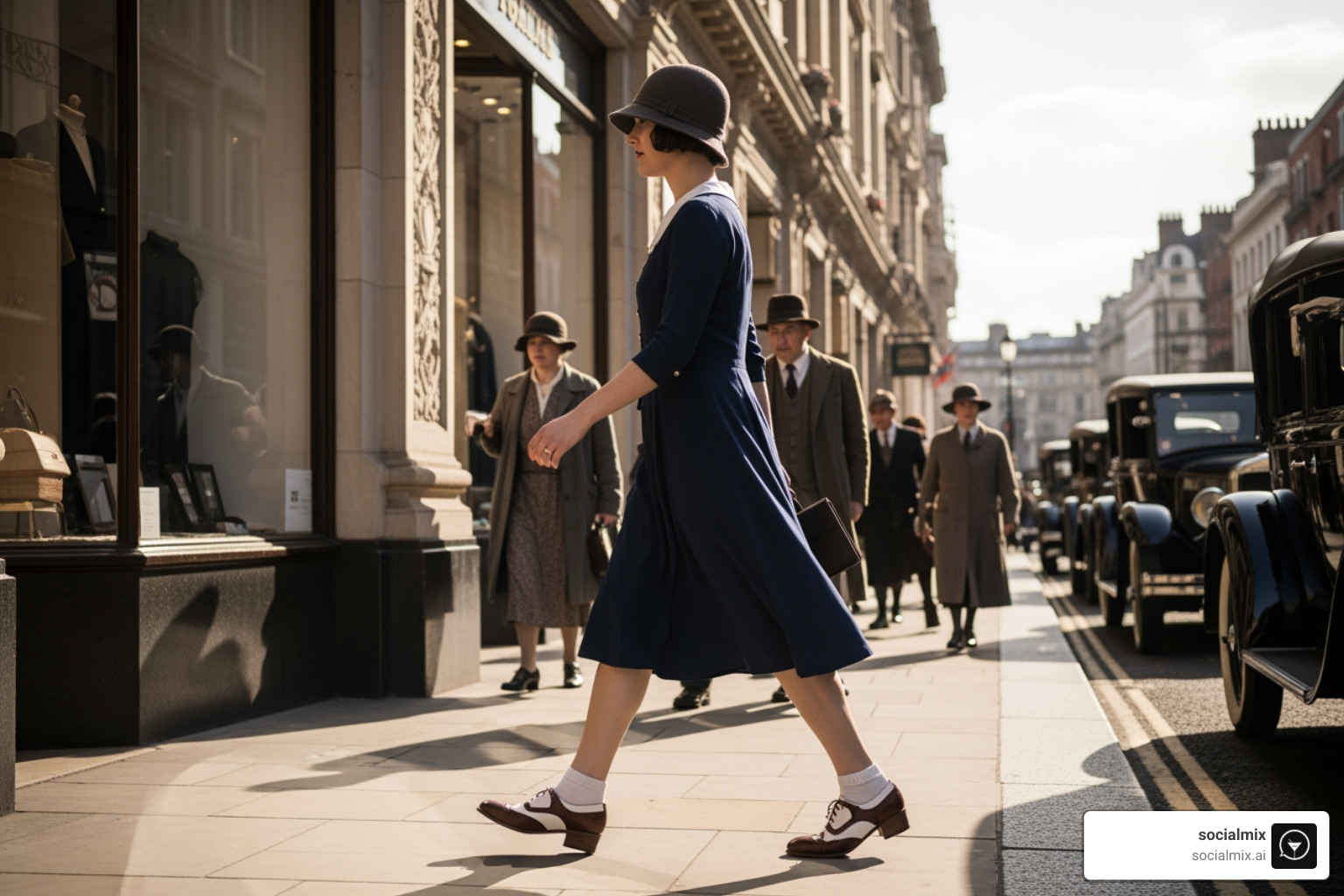
One of the most striking and enduring trends in 1920s fashion shoes was the two-tone style. These shoes, particularly Spectators and Saddle Shoes, played a significant role in defining the decade's playful yet sophisticated aesthetic. Their origins actually lie in utilitarian sportswear, highlighting how function often inspires fashion.
Spectator shoes, with their contrasting toe caps and heels, first emerged in the late 19th century as reinforced footwear for European athletes, particularly cricket players. The contrasting patches were originally added to high-wear areas. As women acceptd more active lifestyles, including sports like golf and tennis, practical yet stylish footwear became essential. Saddle Shoes, characterized by a contrasting "saddle" shaped panel over the instep, became incredibly popular for their sporty appeal. They offered a stylish yet practical option that could keep up with women's increased participation in leisure activities.
Two-tone shoes were a masterclass in color blocking and texture blocking. While brown and white was a classic combination, we also saw brown and tan, and occasionally striking black and ivory variations. These designs allowed for unique swirl patterns and bold contrasts, adding a vibrant touch to daywear. They were a perfect reflection of the Art Deco era's love for geometric patterns and striking visual effects.
An Evening of Glamour: The Rise of Decorative 1920s Fashion Shoes
As daylight faded and the evening's festivities began, 1920s fashion shoes underwent a dazzling change. The distinction between daywear and evening wear became stark, with evening shoes embracing higher heels, luxurious materials, and an abundance of decorative elements. These were not just shoes; they were jewels for the feet, designed to sparkle under the low lights of speakeasies and ballrooms.
While daywear shoes prioritized comfort and practicality, evening shoes were all about glamour and making a statement. They were crafted to complement the shimmering flapper dresses and sophisticated evening gowns, becoming an integral part of the overall ensemble.
Trend 5: Ornate Evening Pumps
The evolution of heels and toe shapes throughout the 1920s is particularly evident in evening wear. In the early part of the decade, daywear heels were typically sturdy "Louis" heels, about 2 inches high. However, for evening, the heels were raised significantly, often reaching almost 3 inches, and slimmed down into a delicate "spike" heel. This slender profile, combined with the added height, created a more neat and elongated silhouette, perfect for the dance floor.
Toe shapes also saw a progression. Starting with the pointed toes inherited from the Edwardian era, they gradually softened to a rounded or almond shape by the mid-twenties, and then became almost square by the end of the decade. This evolution reflected changing aesthetics and perhaps a slight concession to comfort, even in formal wear. Evening shoes were designed to catch the light, often featuring heels that sparkled with a high sheen. For a comprehensive look at the dazzling attire of this period, explore our guide to Glamour and Glitz: The Ultimate Guide to 1920s Evening Wear.
The Materials and Colors of 1920s Fashion Shoes
The materials and colors used for 1920s fashion shoes were a testament to the era's opulence, especially for evening wear. While daytime shoes often used practical leathers like calfskin, kid, suede, lizard, alligator, and goat (both matte and shiny patent leather were popular), evening shoes demanded fabrics that exuded luxury. Satin, grosgrain, brocade, and even velvet were common choices, offering a rich texture and sheen. These fabrics could be custom-dyed to perfectly match a woman's evening gown, ensuring a seamless and sophisticated look.
Colors for day shoes tended to be more subdued, favoring shades of black, brown, grey, and beige (often called blonde). However, evening shoes burst with vibrant hues. Black, white, silver, and gold were staples, but as the decade progressed, we saw a rise in dramatic colors like red and green, reflecting the bold spirit of the Art Deco movement.
Embellishments were key to evening glamour. Rhinestones, sequins, diamanté, and paste stones were liberally applied, turning shoes into dazzling accessories. We've seen examples like pink satin shoes with rhinestone-studded heels and green satin pumps decorated with silver leather piping, showcasing the era's flair for intricate details. These ornate additions transformed simple pumps into works of art, reflecting the extravagant spirit of the Roaring Twenties.
From Sporty to Practical: Sneakers, Boots, & Galoshes
Beyond the dance halls and formal events, 1920s fashion shoes also acceptd practicality and the burgeoning interest in sports and leisure. This decade saw the rise of transitional styles, weatherproof options, and the very first sneakers, reflecting a broader societal shift towards active living and casual comfort. The shoe industry's explosion in the 1920s meant that women had more choices than ever before, catering to every aspect of their increasingly dynamic lives.
Here are some of the popular casual and practical shoe types of the era:
- Mary Janes (low-heeled for comfort)
- Oxfords (for walking and everyday wear)
- Canvas flats (for summer and casual outings)
- Saddle Shoes (for sports and leisure)
- Canvas sneakers (for athletics)
- Lace-up boots (an Edwardian holdover)
- Russian boots (a short-lived trend)
- Galoshes/Overshoes (for weather protection)
Trend 6: The First Sneakers
The 1920s marked a pivotal moment for athletic footwear, as the tennis shoe or sneaker truly began to find its place. Flat lace-up canvas shoes with flexible rubber soles, such as Keds Champion Classics, became incredibly popular with women athletes. Available in white, black, and brown canvas, these shoes offered comfort and grip for sports like tennis and golf, as well as for casual outings and picnics.
Keds, which introduced its first tennis shoe for women in 1916, quickly became a household name. Their innovative design with a flexible rubber sole revolutionized comfort and performance in active footwear. We even saw high-top canvas sneakers, like Converse All Stars, gaining traction for indoor sports. This trend towards comfortable, rubber-soled footwear was a precursor to the massive sneaker culture we know today. To learn more about the brand that kicked off this revolution, explore More about Keds' history.
Trend 7: Boots and Galoshes
While not as glamorous as T-straps or evening pumps, boots and galoshes played important roles in the 1920s fashion shoes landscape. Lace-up boots, a common sight in the Edwardian era, continued to be favored by more mature women who preferred their familiar comfort and coverage. However, a new boot style, the Russian boot, made a notable, albeit brief, appearance.
Introduced in 1921, Russian boots were mid-calf to knee-high pull-on boots with a straight shaft and a low heel. Made of leather, they gained a certain notoriety, becoming associated with speakeasies. There's a fun anecdote that these boots were sometimes used to hide flasks, giving new meaning to the term "bootlegger." However, despite their intriguing connection to Prohibition culture, Russian boots never truly went mainstream. Their poor quality materials and tendency to make feet look large under shorter dresses limited their widespread appeal. You can dig deeper into their unique history by exploring Learn more about Russian Boots.
Then there were galoshes, or overshoes. These practical rubber coverings were worn over fashionable walking Oxfords and strappy heels to protect them from rain and mud. Interestingly, one popular theory suggests that the term "flapper" itself might have originated from the flapping sound of unbuckled galoshes as young women walked, embracing a playful, rebellious attitude. So, while designed for utility, even these humble overshoes had a quirky impact on the decade's cultural lexicon.
How to Find and Style 1920s Shoes Today
The allure of the Roaring Twenties continues to captivate us, inspiring fashion enthusiasts and party-goers alike. Whether you're aiming for a historically accurate ensemble for "historybounding," dressing up for a themed event, or simply want to infuse your everyday style with a touch of vintage charm, incorporating 1920s fashion shoes is a fantastic way to do it. The versatility and distinctiveness of these styles make them perfect for creating memorable looks. If you're planning a full dive into the era, our guide on Party like it's 1920: Exploring Roaring Twenties Events can provide further inspiration.
Finding Authentic-Looking 1920s Fashion Shoes
For those seeking truly authentic-looking 1920s fashion shoes, reproduction companies are your best bet. A few specialized small companies craft historical footwear using modern sizes and materials, offering high-quality, all-leather options suitable for swing dancing, historical costuming, and even everyday wear. These can be an investment, often ranging over $200, and typically come in limited sizes and widths.
If a full reproduction isn't in your budget, or if you prefer a more subtle nod to the era, modern equivalents abound. Look for new shoes featuring T-straps, thin Mary Jane straps, low-heeled Oxfords, or sporty two-tone designs. Many contemporary brands draw inspiration from vintage styles, making it easier to find pieces that evoke the 1920s aesthetic.
Another creative avenue is the DIY approach. You can transform existing shoes into 1920s-inspired masterpieces with a little imagination. Shoe paints or colorful polishes can give plain shoes a bold new look. For a truly glamorous touch, secure rhinestones, beads, or other embellishments with glue. If you're feeling adventurous, you can even re-cover old shoes with thin silk or satin fabric, creating a unique, custom-dyed effect that was popular in the 1920s.
Styling Tips for a Modern Flapper Look
Integrating 1920s fashion shoes into your contemporary wardrobe or creating a full period-appropriate outfit is all about balance and coordination. We love how a pair of traditional Saddle Shoes, for example, can add a bit of sophistication and sass to a casual everyday ensemble. For an evening look, wearing a two-toned T-strap heel with a dress or a mid-length skirt immediately channels the glamour and elegance of the Jazz Age.
When styling, the 1920s were about coordination, not necessarily strict matching. Think about how your shoes complement your accessories—hats, shawls, and jewelry—rather than just your dress. For a truly authentic flapper vibe, consider pairing your chosen footwear with a classic drop-waist dress and some sparkling accessories. Our guide on Gatsby Glam: Must-Have Roaring Twenties Dresses can help you find the perfect dress to complete your look.
Creating a full 1920s outfit is a delightful journey into historical fashion. Focus on clean lines, a slightly relaxed silhouette, and the playful details that defined the era. With the right pair of 1920s fashion shoes, you're not just walking; you're stepping back in time, ready to make a statement.
Frequently Asked Questions about 1920s Shoes
Why did shoes become a fashion statement in the 1920s?
The primary reason was the dramatic rise in hemlines. As skirts got shorter, first revealing ankles and then moving above the knee, shoes and stockings were no longer hidden beneath long garments. They became a focal point of a woman's outfit, changing from mere necessities into admired fashion accessories. This newfound visibility spurred an explosion in styles, colors, and decoration, making shoes a crucial element of personal expression in the Roaring Twenties.
What shoes did flappers wear for dancing?
Flappers overwhelmingly preferred T-strap heels and Mary Janes for their energetic dance routines. The straps across the instep (whether a single strap for Mary Janes or the distinctive "T" shape for T-straps) were crucial for keeping the shoes securely on their feet during vigorous dances like the Charleston and the Lindy Hop. These styles allowed flappers to dance with confidence and flair, without the worry of losing a shoe mid-step.
What are the most iconic characteristics of 1920s women's shoes?
The most iconic characteristics of 1920s fashion shoes are their distinctive strap designs, moderate heel heights, and evolving toe shapes. Key features include: straps across the instep (T-strap or Mary Jane style) for security and style; a moderate 2-inch curved "Louis" heel or a blocky "Cuban" heel for daytime wear; and a rounded or almond-shaped toe, which became prevalent as the decade progressed. For evening, heels became higher and slimmer, reaching up to 3 inches and often adorned with dazzling embellishments.
Conclusion
The journey through 1920s fashion shoes reveals a fascinating era where footwear truly came into its own. From being largely hidden, shoes emerged as powerful symbols of women's newfound freedom, independence, and personal style. The decade's defining characteristics—strappy designs, practical Oxfords, sporty two-tones, and glamorous evening pumps—continue to inspire and captivate us today.
At socialmix, we believe that every detail contributes to a memorable experience, whether it's the perfect cocktail or the perfect pair of shoes. The 1920s taught us that what we wear on our feet can lift an entire ensemble, infusing it with personality and flair. The enduring legacy of these styles reminds us that true elegance and sophistication are timeless. So, as you step out, whether to a social gathering or just through your day, remember the spirit of the Roaring Twenties. Let your footwear be a conversation starter, a nod to history, and a celebration of your unique style. We invite you to explore how these timeless trends can improve your social experiences and help you Walk the Walk: Must-Have 1920s Style Shoes with confidence and panache.
Leave a comment