



Flappers, Fringes, and Fun: Your Ultimate Guide to 1920s Fashion

The Dawn of a Modern Era: Showing 1920s Styles
The styles of the 1920's fashions marked a dramatic break from the past. Known as the Roaring Twenties, the decade was defined by freedom and new ideas following World War I. As women gained independence and the right to vote, fashion became a bold expression of this societal shift.
Here's a quick look at what defined 1920s fashion:
- Liberated Silhouettes: Dresses became straighter and looser with dropped waistlines, moving away from tight corsets.
- The Flapper Look: Skirts shortened to the knee, while fringe, beads, and a 'boyish' shape became popular.
- Sporty & Modern: Comfort was key, with clothes allowing for easy movement perfect for dances like the Charleston.
- Art Deco Glamour: Geometric designs and shiny details were common, especially for evening wear.
- Dapper Menswear: Men acceptd less formal suits, wide-leg "Oxford Bags," and stylish fedoras.
The fashion of the 1920s mirrored the vibrant energy of jazz, speakeasies, and a new generation embracing modern life.
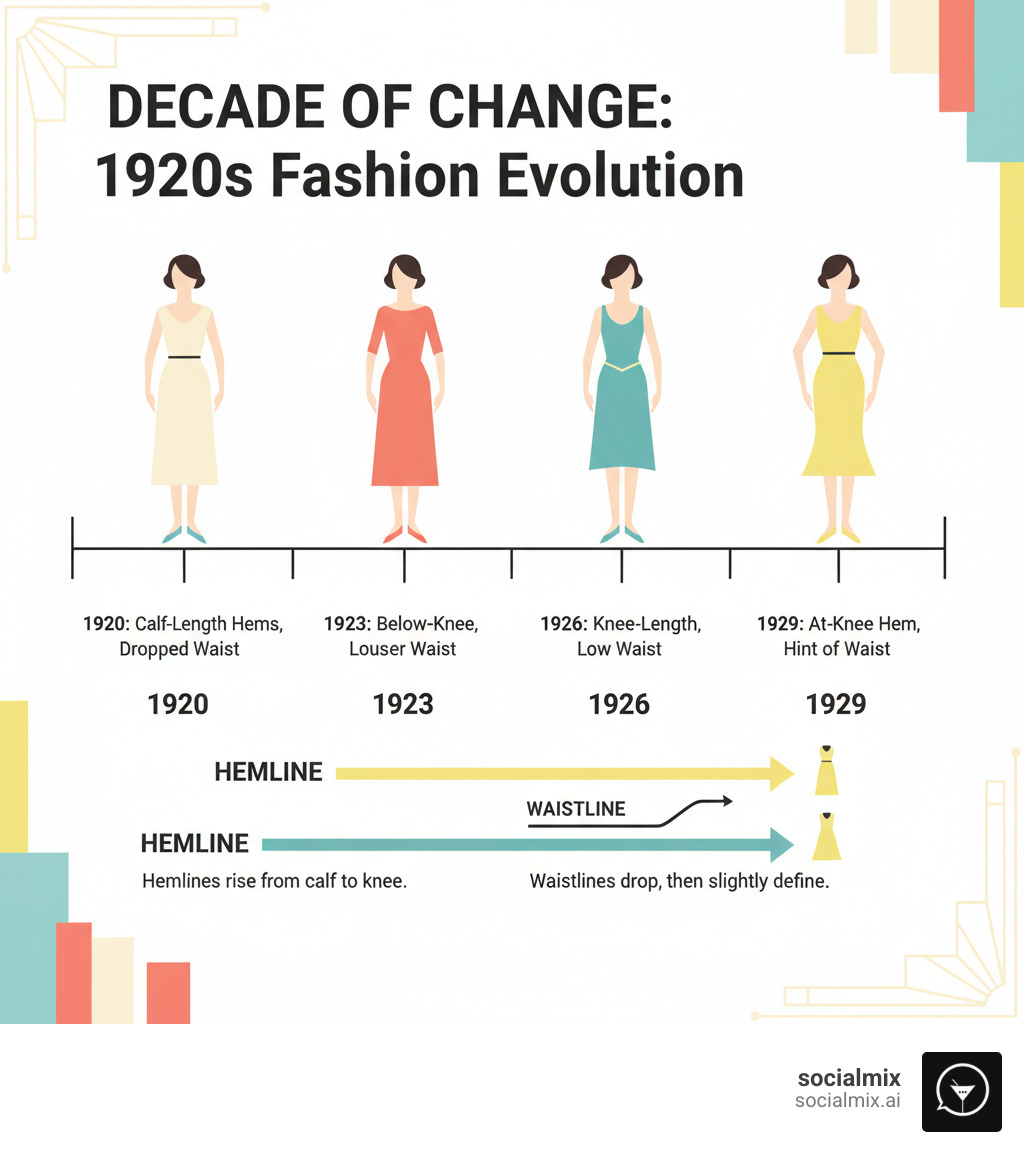
A Revolution in Women's Wear: The Defining Silhouettes
The styles of the 1920's fashions revolutionized women's clothing. As women gained independence after World War I, their wardrobes had to match their new, active roles. The restrictive corsets and heavy skirts of the past were abandoned for something radical: a blend of comfort and style that became a statement of freedom.
The defining look was the "La Garçonne" or tomboy look. This silhouette created a straight, columnar shape that skimmed the body rather than accentuating curves. This tubular shape was achieved with straight-cut dresses that hung loosely from the shoulders, creating a relaxed and unfitted look perfect for an active lifestyle.
Two key features defined this new silhouette. The dropped waistline fell to the hips for most of the decade, giving dresses an effortless appearance ideal for dancing. At the same time, rising hemlines climbed to just below the knee by the mid-1920s—a daring move that was often paired with flesh-colored stockings.
Daywear and evening wear both adopted this silhouette. Day dresses were practical, featuring the drop waist, sleeves, and varied skirt styles like pleats or tiers for texture. Evening wear, however, was all about sparkle. Made from luxurious silk and velvet, gowns were covered in intricate beadwork, sequins, and fringe that impressd in the atmospheric lighting of a jazz club. To see more of this nighttime glamour, explore our Glamour and Glitz: The Ultimate Guide to 1920s Evening Wear.
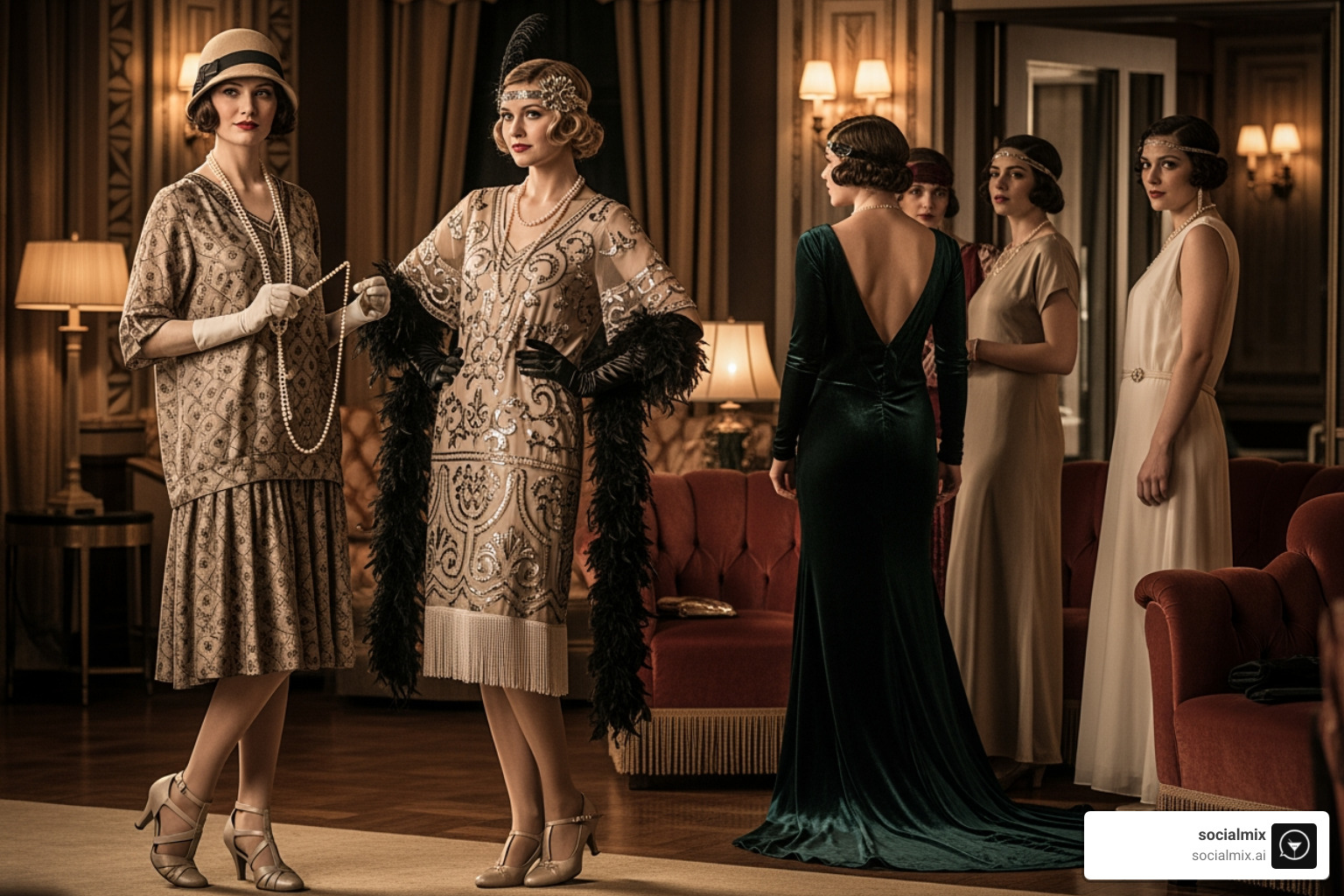
The Flapper: Icon of an Age
The flapper is the undisputed icon of 1920s fashion. She represented rebellion, freedom, and a modern spirit. The flapper style was all about movement, designed for a life of dancing and socializing.
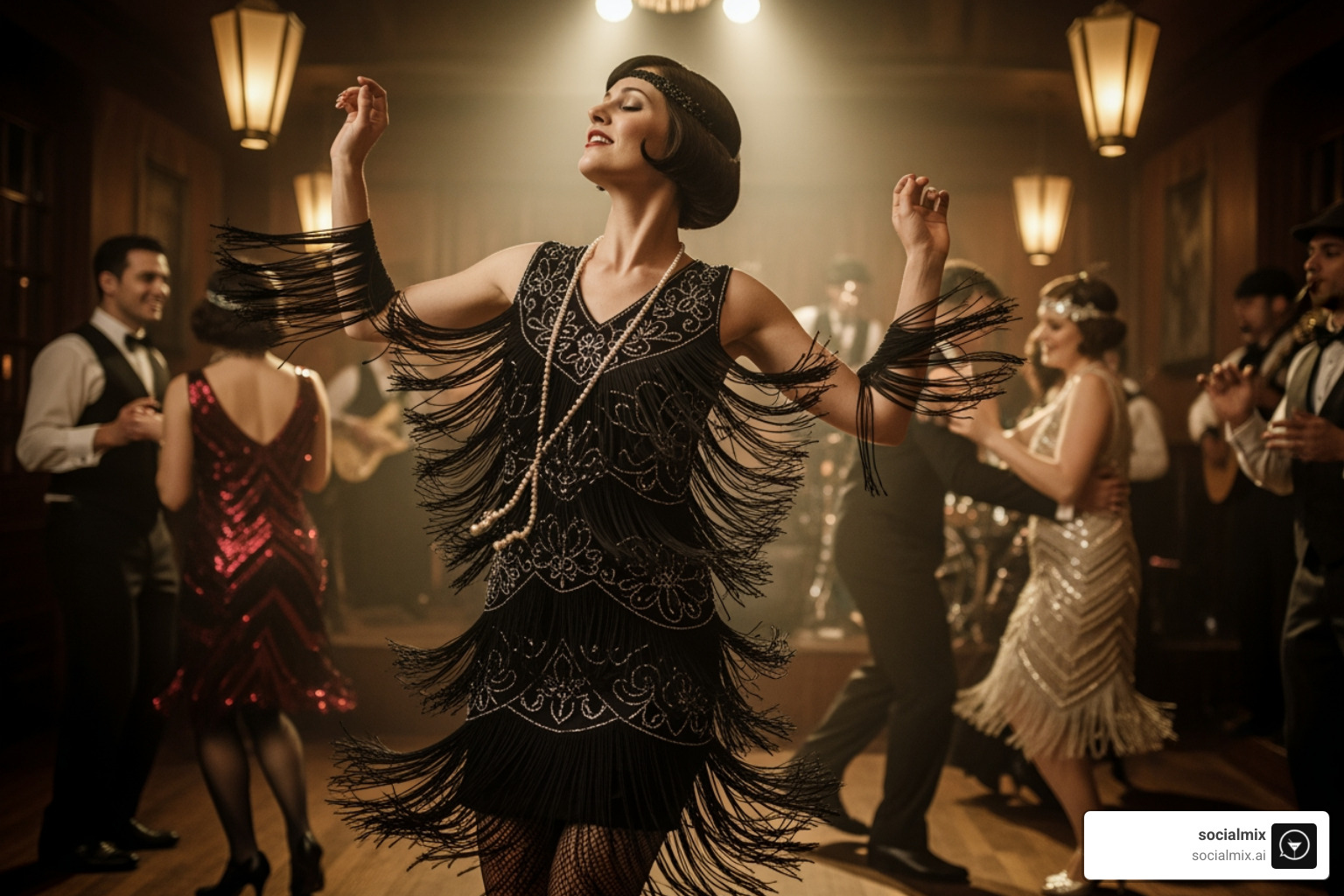
Dresses were loose and straight-cut with the signature dropped waist and knee-length hemlines—a practical necessity for doing the Charleston. Fringed dresses became a signature piece, as the fringe swayed with every dance move, turning the wearer into a piece of performance art. Beading and sequins added the sparkle the decade is famous for.
Film stars like Louise Brooks and Clara Bow popularized the look, inspiring young women to accept its modern glamour. To bring this iconic style into your wardrobe, see our guide on Gatsby Glam: Must-Have Roaring Twenties Dresses.
Key Designers and Alternative Styles
While the flapper look was dominant, several influential designers offered their own take on the styles of the 1920's fashions.
Coco Chanel championed comfortable, practical fashion. In 1926, she introduced the Little Black Dress (LBD), a simple, versatile crepe de chine frock that made elegance accessible. Vogue magazine dubbed it 'Chanel's Ford,' predicting it would become 'a sort of uniform for all women of taste.' See an example of her work in this Chanel Evening Ensemble from The Met.
Jeanne Lanvin offered a romantic alternative. Her "Robe de Style" featured a full, gathered skirt, providing a more traditionally feminine silhouette while still incorporating the era's dropped waist.
Jean Patou was a pioneer of sportswear. He designed stylish yet practical wool jersey ensembles for active women, recognizing the growing importance of sports like tennis. This trend was popularized by athletes like Tennis player Suzanne Lenglen in 1926, who became a fashion icon.

These designers, along with others like Elsa Schiaparelli, created a diverse fashion landscape that went beyond a single silhouette.
Dapper Gents: Prominent Styles of the 1920's Fashions for Men
Men's fashion also saw a significant shift in the 1920s, moving away from stiff formality toward a new blend of comfort and sophistication. The styles of the 1920's fashions for men allowed them to finally breathe easier.
London's Savile Row remained the epicenter of tailoring, but the aesthetic was increasingly shaped by the British aristocracy's love for sporting activities. As the decade progressed, clothing loosened up. The "Jazz Suit," a softer two-piece ensemble, began replacing formal three-piece suits for everyday wear, often in popular pinstripes, tweeds, and flannels.
A key influencer was Edward, Prince of Wales. His accept of casual sportswear, like plus-fours for golf and argyle sweaters, made these items instantly fashionable. He helped define the decade's balance of comfort and elegance.
For modern gents looking to capture this relaxed aesthetic, our guide on From Speakeasy to Street: Roaring Twenties Suits for Modern Men offers plenty of inspiration.

Suits, Trousers, and Sportswear
The revolution in men's styles of the 1920's fashions was most apparent in suits and trousers. The typical suit was a two-piece in pinstripes, tweeds, or flannels. Jackets evolved from high-waisted and narrow-lapelled early in the decade to a more relaxed fit with wider lapels by the late 1920s.
The most distinctive trouser style was the "Oxford bags." These wide-legged pants became wildly popular with younger men, making a bold fashion statement. For active pursuits like golf, men wore "plus-fours," baggy knickers that offered comfort and easy movement.
Accessories were key to the look. Ties became narrower, and bow ties were popular for both day and formal wear. Vests, pocket squares, and cufflinks added personality. For a look at how these elements came together in a social setting, see our guide to 1920s Bartender Attire: Classic Styles and Inspirations.
Decoding men's styles of the 1920's fashions
Men's fashion evolved quickly, moving from conservative, narrow silhouettes in the early 1920s to a much looser, bolder look by the end of the decade.
| Feature | Early 1920s Menswear | Late 1920s Menswear |
|---|---|---|
| Silhouette | More conservative, slightly narrower trousers | Looser fit, bolder patterns, wider Oxford bags |
| Suit Jackets | Shorter, often with high waists and narrow lapels | Longer, normal waists, wider lapels |
| Trousers | Generally narrower, cuffed | Predominantly wide-legged (Oxford bags), often cuffed |
| Patterns | Subtle pinstripes, solid colors | More pronounced pinstripes, checks, tweeds, flannels |
| Sportswear | Emerging, but still distinct from daily wear | More integrated into daily casual wear (plus-fours, sweaters) |
| Overall Feel | Transitioning from Edwardian formality, still somewhat stiff | Relaxed, comfortable, yet still dapper and sophisticated |
No gentleman's outfit was complete without a hat—fedoras, homburgs, and bowlers were standard, with straw boaters for summer. The quintessential footwear was the two-tone spectator shoe, whose sporty elegance perfectly captured the decade's spirit of casual sophistication.
The Cultural Fabric: How Jazz, Art Deco, and Gatsby Shaped the Decade
The styles of the 1920's fashions were deeply intertwined with the era's culture. Fashion was shaped by the music, art, and social scenes of the decade.
Jazz music, born in African American communities and amplified by the Harlem Renaissance, was the era's heartbeat. The energetic rhythms of dances like the Charleston demanded freedom of movement, which fashion provided with loose, fringed flapper dresses. Nightclubs and speakeasies became the stages where these styles, sparkling with beads and sequins, came alive.
The Art Deco movement, launched in Paris in 1925, also had a profound influence. Its love for clean lines, bold geometric shapes, and streamlined luxury translated into sharp, angular cuts and symmetrical designs in clothing. This was complemented by an "Egyptian revival" following the 1922 findy of Tutankhamun's tomb, which introduced exotic motifs to jewelry and fabrics.
These forces transformed social life, turning speakeasies into hubs of style and self-expression. To capture that electric atmosphere, explore Party Like It's 1920: Exploring Roaring Twenties Events.
The Great Gatsby Style
F. Scott Fitzgerald's The Great Gatsby immortalized the decade's most luxurious fashions, and "Gatsby style" is now synonymous with 1920s opulence.
This was the fashion of lavish parties. For women, it meant gowns dripping with hand-sewn beads and sequins, like this stunning American Evening Dress from 1924. The look was completed with feather boas, jeweled headpieces, and long strands of pearls.
Men's Gatsby style featured sharp tuxedos with silk lapels for evening events and light-colored linen suits for daytime parties. Pinstripe suits symbolized success, while two-tone spectator shoes added a touch of playful sophistication.
This aesthetic embodied the Jazz Age's spirit of optimism and excess, allowing people to celebrate a new era of prosperity. For more inspiration, explore Gatsby's Closet: Must-Have Gatsby-Themed Attire.
Finishing the Look: Essential 1920s Accessories, Hair, and Makeup
In the styles of the 1920's fashions, accessories were essential. The right hat, jewelry, and shoes transformed an outfit into a statement of personal style.
Headwear and Hairstyles
The defining headwear was the cloche hat, a close-fitting, bell-shaped hat pulled low over the forehead. Its popularity drove the trend for short hair, making the bob haircut the look of the era. Popularized by stars like Louise Brooks, the bob was a declaration of modernity.
Variations included the very short shingle bob and the even shorter Eton crop. Hair was often styled with tight, sculpted Marcel waves or finger waves. For evening, women wore elaborate headbands adorned with jewels and feathers. For a complete guide to the era's headwear, see our Crowning Glory: The Essential Guide to Roaring Twenties Hats.
Jewelry, Shoes, and Handbags
Accessories completed the 1920s look with glamour and personality.
- Jewelry: Art Deco's geometric influence was everywhere. Long pearl necklaces, often worn in multiple strands, were iconic. Art Deco brooches, drop earrings, and stacked bracelets added sparkle and movement.
- Shoes: With rising hemlines, shoes took center stage. T-strap heels and Mary Janes were popular because their straps provided stability for dancing. Modest heels were preferred for comfort. For a casual look, both men and women wore two-tone spectator shoes. Find more styles in our guide to Must-Have 1920s Style Shoes.
- Handbags: Small, intricate beaded purses and clutches were the perfect finishing touch for an evening out.
Makeup was equally bold, featuring dark, smoky eyes, thin arched eyebrows, and the signature Cupid's bow lips in deep red. It was the final element in creating the daring, glamorous image of the modern woman.
Frequently Asked Questions about 1920s Fashion
What is the most iconic style of the 1920's fashions?
The most iconic style is the flapper dress. It perfectly captured the decade's spirit of freedom with its loose, straight silhouette, dropped waist, and knee-length hem. Adorned with beads, sequins, and fringe, the dress was designed for movement and dancing. Paired with a bob haircut and a cloche hat, it symbolized the "New Woman" of the era. Find your perfect flapper-inspired look in our guide to Gatsby Glam: Must-Have Roaring Twenties Dresses.
How did men's fashion change in the 1920s?
Men's fashion shifted from stiff formality to relaxed sophistication. Suits became softer and less structured, often in fabrics like tweed and flannel. The most dramatic change was in trousers, with the rise of wide-legged Oxford bags. Sportswear, like plus-fours for golf, also became popular for casual wear, a trend championed by style icons like the Prince of Wales. Essential accessories included narrower ties, fedora hats, and two-tone spectator shoes. Explore these dapper styles of the 1920's fashions in our guide, From Speakeasy to Street: Roaring Twenties Suits for Modern Men.
What is 'Great Gatsby' style?
"Great Gatsby style" refers to the most opulent and luxurious fashion of the 1920s, inspired by the lavish parties in F. Scott Fitzgerald's novel. For women, this means heavily beaded and sequined gowns, feather boas, and jeweled headpieces. For men, it's sharp tuxedos, light-colored linen suits, and sophisticated accessories like spectator shoes. It embodies the excess and celebratory spirit of the Jazz Age. To channel this look, visit Gatsby's Closet: Must-Have Gatsby-Themed Attire.
Conclusion: Bringing the Roaring Twenties to Your Wardrobe
The 1920s was a decade of remarkable change, where fashion became a powerful statement of freedom and identity. The styles of the 1920's fashions, from the flapper's fringed dress to the gentleman's dapper suit, were about more than just clothes—they were about redefining style for a modern world.
This era reminds us that fashion is a celebration of who we are and how we connect. The glamour of a Gatsby-style party or the energy of a jazz club created unforgettable memories, fueled by confidence and self-expression.
At socialmix, we believe in the magic of those social connections. Inspired by the Roaring Twenties, we create clothing and accessories designed to lift your gatherings. The spirit of the 1920s teaches us that style is about expressing yourself with flair and making every moment memorable.
The legacy of this decade lives on in modern interpretations that blend vintage elegance with contemporary comfort. We hope this guide to the styles of the 1920's fashions has inspired you to bring a touch of Jazz Age sophistication to your wardrobe.
Explore our ultimate guide to 1920s evening wear for more inspiration on creating your own moments of elegance.
Leave a comment