



Twenties Glamour: Where to Shop for Stunning 1920s Dresses

The Roaring Return of 1920s Fashion
1920 dresses are experiencing a major comeback, and it's easy to see why. These iconic garments blend timeless glamour with modern versatility, making them perfect for themed parties, weddings, and anyone who wants to make a statement.
Quick Guide to 1920s Dress Styles:
- Flapper Dresses - Knee-length, heavily beaded with fringe, perfect for dancing
- Evening Gowns - Longer hemlines with intricate beadwork, ideal for formal events
- Day Dresses - Simple, chic designs with softer fabrics and minimal embellishment
- Key Features - Dropped waist, straight silhouette, Art Deco patterns, sequins and beading
The 1920s marked a shift in women's fashion. After World War I, women rejected the restrictive corsets and floor-length gowns of the Edwardian era. Hemlines rose to the knee for the first time in centuries, waistlines dropped to the hips, and the boyish, straight-line silhouette became the height of fashion.
This wasn't just about clothes. The fashion revolution reflected broader social changes, including women's suffrage and a new sense of freedom. The Jazz Age brought dance halls, speakeasies, and a "live for today" attitude that influenced every aspect of style.
Today's 1920s-inspired dresses capture that same spirit of liberation and glamour. Whether you're attending a Great Gatsby party, looking for wedding guest attire, or simply want to channel that Roaring Twenties energy, these dresses offer something special. They're conversation starters that let you express your unique style while honoring a truly transformative era in fashion history.
From heavily beaded flapper dresses to neat evening gowns, the options are more accessible than ever. Modern designers have taken the iconic elements—Art Deco patterns, luxurious beading, and that distinctive silhouette—and adapted them for contemporary wear.
What Defines the Iconic 1920s Dress?
The 1920s didn't just change fashion—it completely revolutionized it. When we look at 1920 dresses from this era, we're witnessing a bold rejection of everything that came before. These weren't just clothes; they were statements of freedom, independence, and a new way of living.
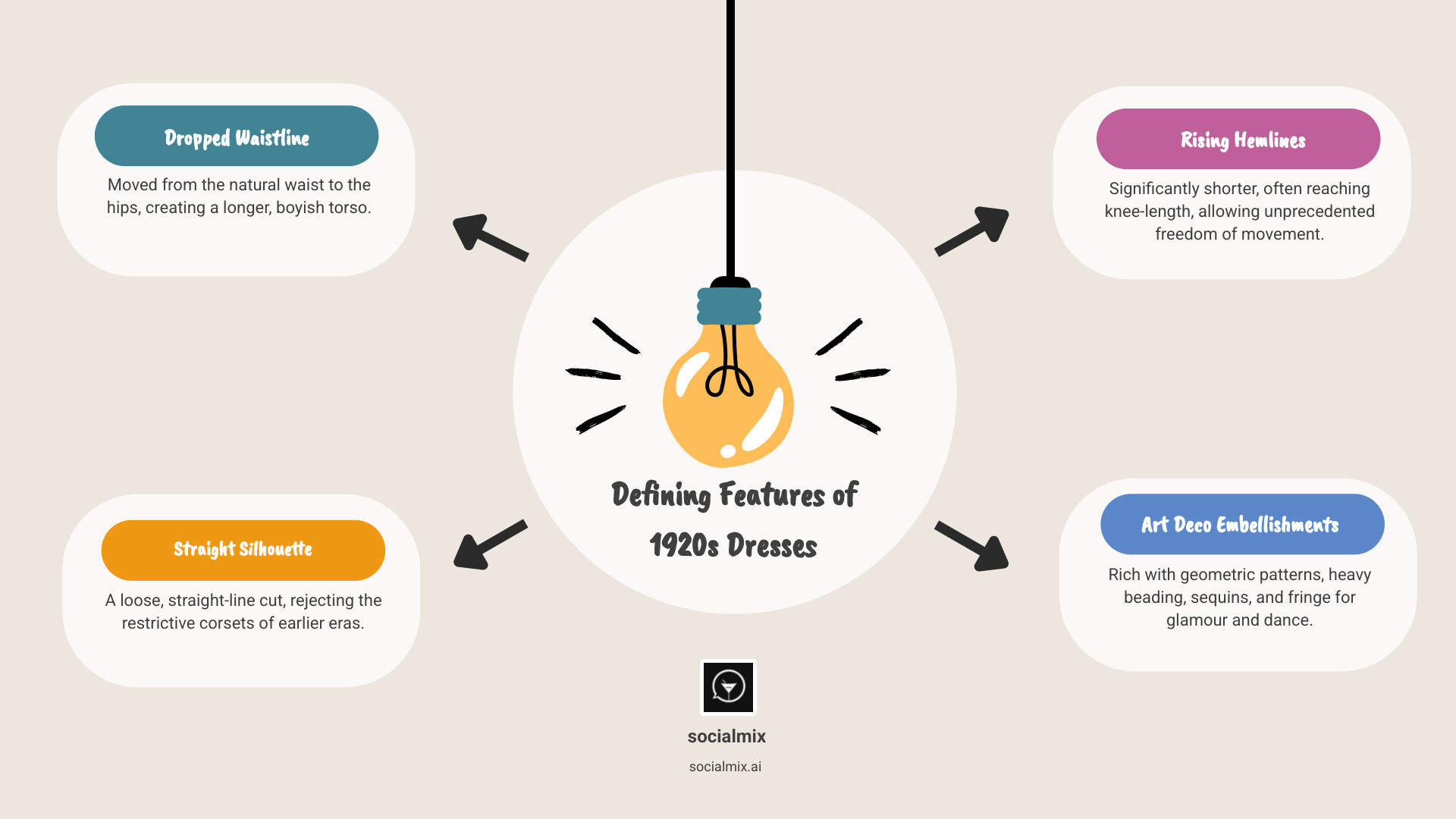
The most striking change was the silhouette itself. Gone were the cinched waists and restrictive corsets that had defined women's fashion for centuries. Instead, the 1920s introduced a straight, boyish line that let the fabric hang loosely from the shoulders. The waistline dropped dramatically to sit at the hips rather than the natural waist, creating an entirely new shape. And perhaps most shocking for the time, hemlines rose to just below the knee—a length that would have been scandalous just a decade earlier.
This shift wasn't just about aesthetics. These dresses were designed for movement. Women could finally dance the Charleston without fighting against layers of heavy fabric. They could walk with ease, drive cars, and participate fully in the vibrant social scene that was exploding across cities. The fashion reflected a new reality where women were claiming space in the world.
The change was deeply connected to broader social changes happening at the time. Women had just won the right to vote, World War I had upended traditional society, and jazz music was creating an entirely new cultural landscape. Fashion became a way to express this newfound freedom. The clothes women wore weren't just following trends—they were making a statement about who they were and who they could become.
You can explore authentic examples of 1920s fashion from The Met to see how diverse and innovative these designs truly were.
From Edwardian Restriction to Flapper Freedom
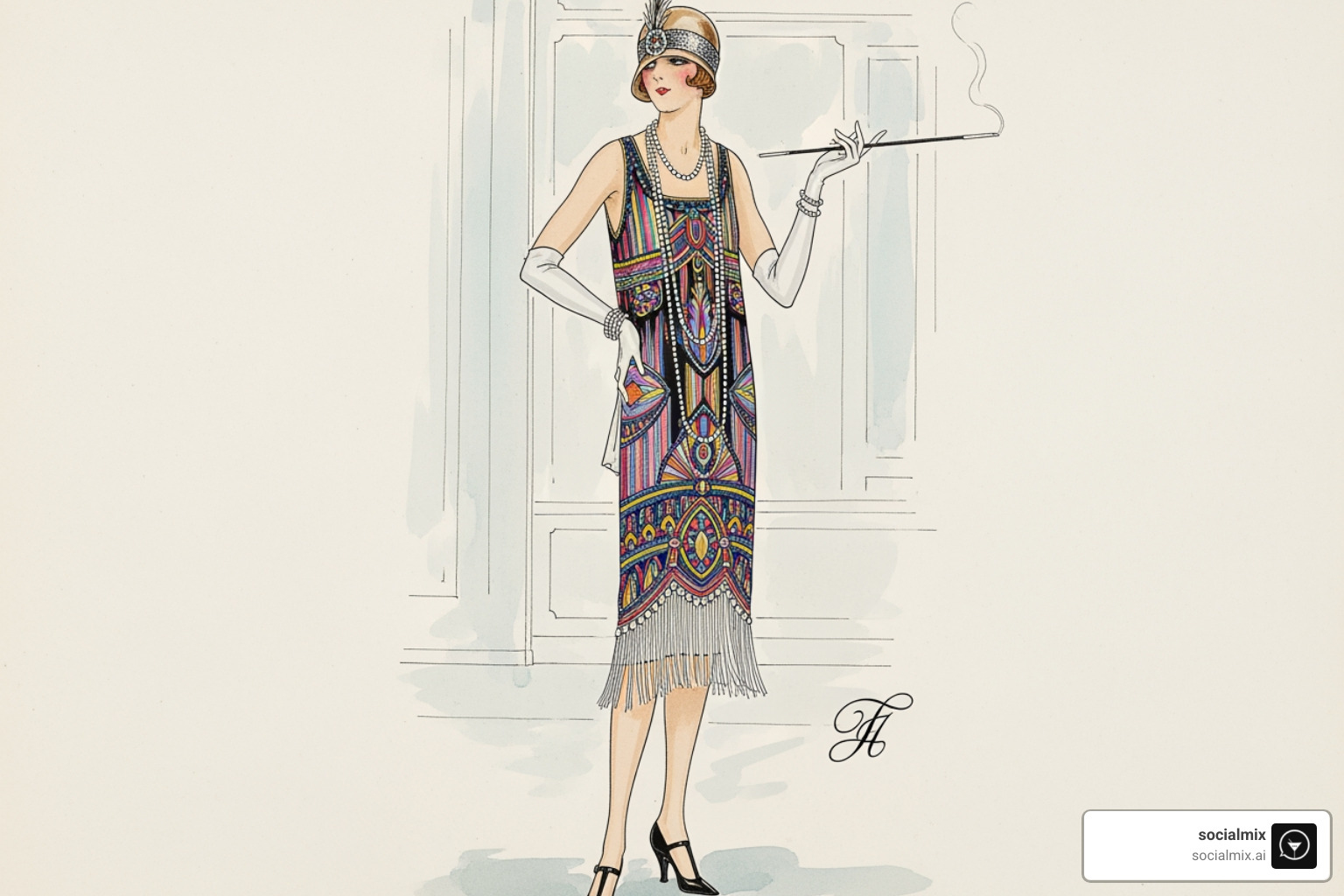
To really understand why 1920 dresses were so revolutionary, we need to look at what women were wearing just before. The Edwardian era was all about the S-bend corset—a contraption that pushed the bust forward and the hips back to create an exaggerated hourglass figure. Pair that with floor-length gowns that swept along the ground, and you had a look that was undeniably beautiful but incredibly restrictive.
Walking up stairs was a challenge. Dancing was limited. Even sitting comfortably required careful maneuvering. The entire silhouette was designed to display an idealized feminine form, but at the cost of comfort and mobility.
Then came the 1920s and the 'La Garçonne' look—French for 'the boy' or 'boyish woman.' This was fashion rebellion at its finest. The new ideal minimized curves rather than emphasizing them. Women actually wore specialized undergarments designed to flatten the chest, creating that signature straight silhouette. The chemise dress, which hung straight from the shoulders with no defined waistline, became the uniform of modern women everywhere.
This wasn't just a style choice—it was practical liberation. Women could finally dance the Charleston with wild abandon. They could move freely through speakeasies and jazz clubs. They could live actively without their clothing holding them back. The straight-line silhouette represented a modern woman who refused to be confined by outdated expectations.
The Role of Art Deco and Embellishments
While the silhouette of 1920 dresses was all about simplicity and freedom, the decoration was pure extravagance. The Art Deco movement, which officially launched at the 1925 International Exhibition in Paris, brought geometric patterns and angular designs into fashion. These sharp lines and stylized motifs gave dresses a distinctly modern, sophisticated edge.
But what really made these dresses unforgettable was the embellishment. Evening gowns were crafted from luxurious fabrics like silk, velvet, and chiffon that draped beautifully and caught the light. Then came the real magic: beading, sequins, and fringe that transformed simple silhouettes into dazzling works of art.
The beadwork alone could take hundreds of hours to complete. Craftspeople would hand-sew thousands of glass beads and sequins onto dresses, creating intricate Art Deco patterns that shimmered with every movement. Rhinestones added extra sparkle, while strands of pearls—both real and imitation—became essential accessories.
Fringe deserves special mention because it perfectly captured the spirit of the era. Layered in tiers, fringe would swing and sway with every step and dance move. On a crowded dance floor under the lights of a speakeasy, these dresses came alive. The fringe accentuated movement, making dancers look even more dynamic and free.
This combination of luxurious materials and elaborate embellishments created the 'Gatsby glamour' we still recognize today. These weren't just dresses—they were celebrations of life during a time when people were determined to enjoy every moment. The Prohibition era might have banned alcohol, but it couldn't dampen the desire for beauty, fun, and self-expression. Fashion became a form of rebellion and joy rolled into one.
For more insights into how fashion reflected the spirit of this unique time, check out our guide Dressed to the Nines: Prohibition Era Fashion Unveiled.
Our Top Picks: The Best 1920s Dresses for Modern Glamour
Finding the perfect 1920 dresses today is easier than you might think. These timeless pieces bring together the best of both worlds—authentic vintage charm with the comfort and quality of modern construction. Whether you're planning your outfit for a themed celebration or just want to add some Jazz Age magic to your wardrobe, there's a style that'll make you feel like you've stepped straight out of a speakeasy.
Iconic Flapper 1920 Dresses
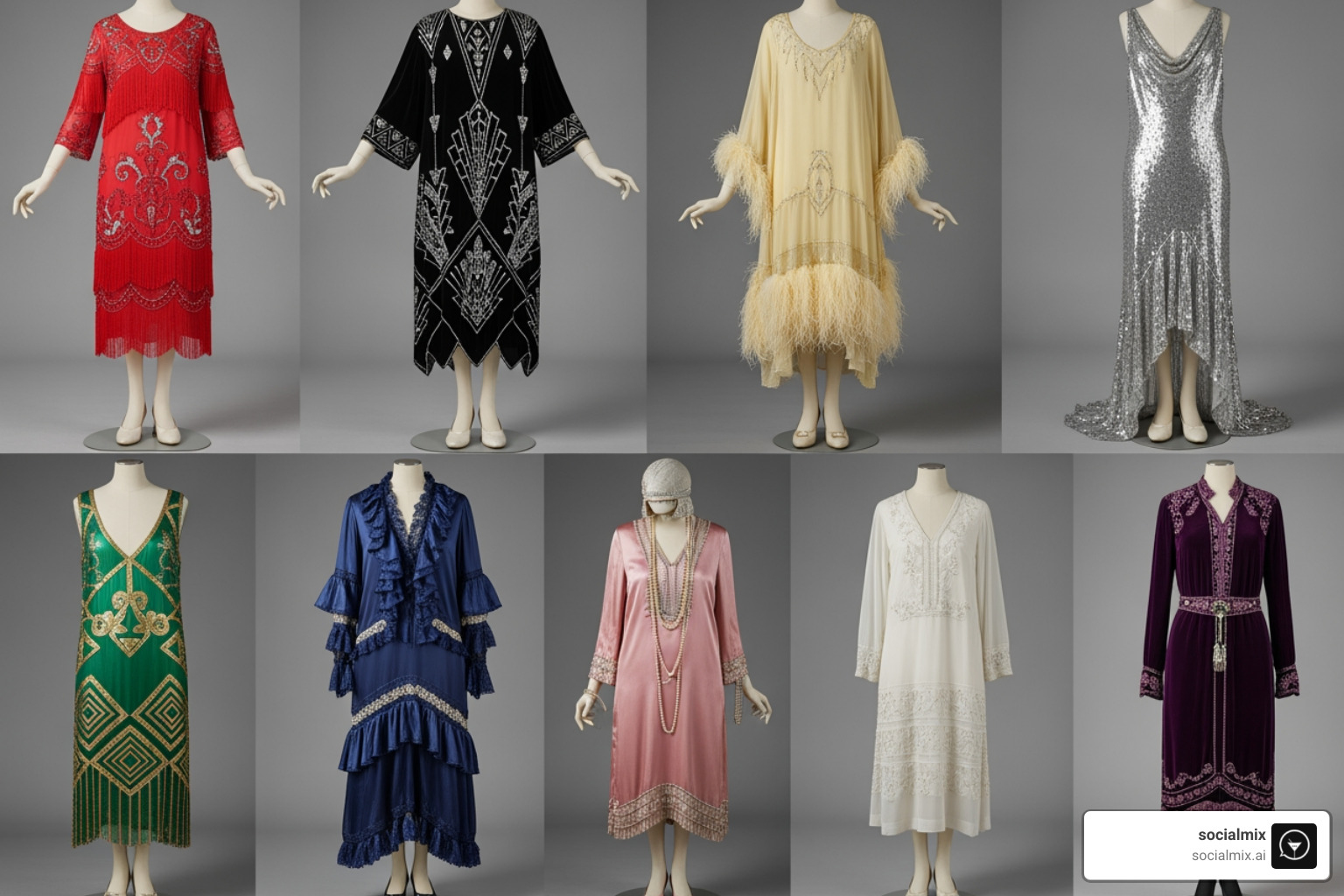
The flapper dress is what most of us picture when we think of 1920 dresses. And honestly? There's nothing quite like it. These are the dresses that made the Roaring Twenties roar—designed specifically for dancing, celebrating, and living life to the fullest.
What makes a flapper dress special is all about movement and sparkle. Picture tiers of fringe that shimmer and sway with every step you take. Imagine heavy beading and sequin work that catches every light in the room. The knee-length hemline and dropped waist aren't just style choices—they were design features that let women move freely on the dance floor.
Many modern designers have mastered the art of creating these dresses for today's wearers. They capture that authentic 1920s feel while making sure you're comfortable enough to actually enjoy your evening. These dresses are perfect when you want to make an entrance—whether you're heading to a Great Gatsby party, hitting up a speakeasy-themed bar, or just want to channel some serious vintage glamour. For more ideas on rocking this look, take a peek at our guide to Gatsby Glam: Must-Have Roaring Twenties Dresses.
Neat Evening 1920 Dresses
Not every night in the 1920s was about dancing until dawn. The era also gave us some breathtakingly neat evening gowns that brought sophistication to formal affairs. These 1920 dresses tell a different story—one of refined glamour and timeless grace.
Evening gowns from this period often featured longer hemlines, sometimes flowing all the way to the floor. The 'robe de style' was a particularly beautiful example, with a slightly fuller skirt that set it apart from the typical straight silhouette. Designer Jeanne Lanvin made this style famous, and it remains stunning nearly a century later.
What sets these dresses apart is the craftsmanship. We're talking intricate beadwork that must have taken countless hours, delicate embroidery, and luxurious fabrics like silk and velvet. These weren't dresses meant for wild abandon—they were for making a sophisticated statement at black-tie events, formal dinners, and high-society gatherings. Many designers today offer beautiful collections that let you embody that old-Hollywood elegance, making it easy to find a dress for your next formal event.
Simple & Chic Day Dresses
Here's something many people don't realize about 1920 dresses—they weren't all sequins and fringe. Women needed practical, comfortable clothing for everyday life, and the 1920s delivered with wonderfully chic day dresses.
These dresses kept the era's signature dropped waist and relaxed silhouette, but they dialed back the drama. Instead of heavy beading, you'd find soft pleats, subtle sashes, or delicate embroidery. The fabrics were chosen for comfort and wearability—crepe de chine for its beautiful drape, cotton for breathability, and wool for cooler weather. Rayon, which was brand new at the time and called 'artificial silk,' also became popular for its affordability and versatility.
The beauty of these simpler styles is how well they translate to modern life. They're perfect for vintage-themed brunches, garden parties, or just those days when you want to feel put-together without being overdressed. They offer that non-flapper 1920s aesthetic that's surprisingly versatile and easy to wear. Plus, they prove that you don't need all the sparkle to capture the spirit of the era—sometimes elegance is in the simplicity.
How to Complete Your Roaring Twenties Look
You've found the perfect 1920 dress, but here's the thing—the magic of the Roaring Twenties wasn't just in the dresses themselves. It was in how women put the entire look together, from head to toe. The right accessories don't just complement your outfit; they transport you straight into the heart of the Jazz Age.
Let's start at the top. Cloche hats were everywhere in the 1920s, and for good reason. These close-fitting, bell-shaped hats were designed to sit snugly over the popular bobbed hairstyles of the era, often pulled down low over the forehead to create that mysterious, chic silhouette. They weren't just fashionable—they were the perfect finishing touch that embodied the spirit of the modern woman.
Long pearl necklaces were another essential, often worn in multiple strands that could be looped, knotted, or left to swing freely. There was something wonderfully carefree about how these pearls moved with you, adding instant sophistication to any outfit. For evening affairs, feather boas provided that theatrical flourish the era loved, while ornate headbands—adorned with beads, sequins, or feathers—became the signature accessory for flappers hitting the dance floor.
Your shoes matter just as much. T-strap shoes and classic Mary Janes were the footwear of choice, offering both style and the stability you'd need for dancing the Charleston all night. These weren't just pretty—they were practical, which was important for women who were finally free to move.
Art Deco jewelry deserves special mention. With its geometric designs, bold lines, and striking patterns, it perfectly matched the aesthetic of 1920 dresses. Think angular brooches, statement rings, and earrings that caught the light with every turn of your head. Rhinestones added extra sparkle without the cost of real diamonds, making glamour accessible to more women than ever before.
And then there's the hair. The iconic finger waves hairstyle created those sleek, sculpted waves that framed the face beautifully. This look took skill to achieve, but it was worth it—nothing says 1920s quite like those perfectly formed waves.
At socialmix, we believe that getting dressed should feel like crafting the perfect cocktail—every element carefully chosen to create something memorable. Just as a skilled bartender knows that the garnish matters as much as the spirit, we understand that these accessories are what truly complete your Roaring Twenties change. For an in-depth look at getting your headwear just right, explore our guide to Crowning Glory: The Essential Guide to Roaring Twenties Hats.
Frequently Asked Questions about 1920s Dresses
Curious about 1920 dresses and how to bring this iconic style into your modern wardrobe? You're not alone. We hear these questions all the time from people who want to capture that Jazz Age magic. Let's explore the most common ones.
What is the main difference between a flapper dress and other 1920s styles?
Here's the thing: flapper dresses are actually a specific type of evening wear, not just any dress from the 1920s. They were designed with one purpose in mind—dancing the night away in speakeasies and jazz clubs.
What makes them stand out? The heavy beading, shimmering sequins, and those iconic layers of fringe that swing with every movement. These weren't just decorative choices. They were functional elements that created a dazzling, dynamic effect on the dance floor. The silhouette is loose and free, with that characteristic dropped waist and knee-length hemline that gave women unprecedented freedom to move.
But the 1920s offered so much more than just flapper dresses. Day dresses were simpler affairs, crafted from practical fabrics like cotton or wool with minimal embellishment. These were for everyday life—shopping, afternoon tea, casual gatherings. Then there was the 'robe de style,' a more formal evening gown that featured a fuller skirt and sometimes a longer hemline, offering a different kind of elegance. While all these styles shared that signature dropped waist and looser fit, the flapper dress remains the most recognizable because of its exuberant embellishments and its association with the era's vibrant nightlife.
What are the best occasions to wear a 1920s-inspired dress today?
The beauty of 1920 dresses is their surprising versatility. They're absolutely perfect for themed parties—Great Gatsby events, Roaring Twenties celebrations, or speakeasy nights where you can really lean into the drama and glamour of the era.
But don't limit yourself to costume parties. These dresses are making waves at weddings, both as bridal gowns and guest attire, bringing a unique vintage sophistication to the celebration. They're stunning choices for proms, where you want to stand out from the crowd. Cocktail parties are another natural fit—the sparkle and elegance of a beaded 1920s dress perfectly matches the sophisticated atmosphere. And New Year's Eve? There's no better time to accept the festive, celebratory spirit these dresses embody.
At socialmix, we're all about elevating social experiences and creating connections through style. A beautifully chosen 1920s-inspired dress does exactly that, turning any gathering into something memorable. If you're looking for more guidance on matching your outfit to the occasion, our guide on Dressed to Impress: Navigating Classic Cocktail Attire offers plenty of helpful insights.
What materials were popular for 1920s dresses?
The fabrics used for 1920 dresses tell their own story about the occasion and the wearer's social status. The distinction between daywear and evening wear was significant.
Evening gowns were all about luxury and drama. Designers reached for sumptuous fabrics that draped beautifully and could showcase the era's spectacular embellishments. Silk, velvet, and chiffon were the stars of the show, providing that neat flow and rich texture. These high-end materials served as the perfect foundation for the intricate glass beads, shimmering sequins, and delicate metallic threads that made evening dresses truly sparkle under the lights of jazz clubs and ballrooms.
Day dresses took a more practical approach. Cotton and wool were the workhorses here, offering comfort and durability for everyday activities. But the 1920s also introduced something revolutionary: rayon, which people called "artificial silk" at the time. This innovative fabric offered the luxurious drape of silk at a fraction of the cost, making fashionable dresses accessible to a wider range of women. It was a game-changer that democratized style in ways that reflected the broader social changes of the decade.
This mix of traditional natural fibers and exciting new synthetics meant there was a 1920s dress for every woman, every occasion, and every budget. It was fashion for a new, modern age.
Conclusion: Accept the Glamour of a Bygone Era
There's something magical about slipping into a 1920 dress that transcends simple fashion. These aren't just beautiful garments—they're wearable pieces of history that capture a moment when women dared to redefine themselves. The dropped waists, the shimmering beads, the playful fringe—each element tells a story of liberation, confidence, and pure joy.
What makes these dresses truly special is how effortlessly they bridge past and present. A heavily beaded flapper dress can turn heads at a modern cocktail party just as it did in a Jazz Age speakeasy. A neat evening gown with Art Deco embellishments brings sophistication to today's formal events. Even the simpler day dress styles offer a refreshing alternative to contemporary casual wear, proving that good design never goes out of style.
At socialmix, we understand that the best social experiences happen when style meets substance. Just as a perfectly crafted cocktail combines the right ingredients to create something memorable, the right outfit can transform an ordinary evening into an unforgettable occasion. A 1920s-inspired dress does exactly that—it's a conversation starter, a confidence booster, and a celebration of individuality all wrapped into one stunning package.
Whether you're drawn to the exuberant energy of a fringed flapper dress or the refined elegance of a beaded evening gown, there's a piece of Roaring Twenties style waiting to become part of your story. These dresses invite you to step outside the ordinary, to accept a little glamour, and to carry the fearless spirit of the Jazz Age into your own social gatherings.
So go ahead and find that perfect dress. Let it remind you that fashion can be fun, that history can feel fresh, and that sometimes the best way to move forward is to take a little inspiration from the past. For even more guidance on capturing that iconic era, explore the ultimate guide to 1920s evening wear and find how to make every social moment truly shine.
Leave a comment